
What Is Raw Cacao? A Guide for Food Manufacturers
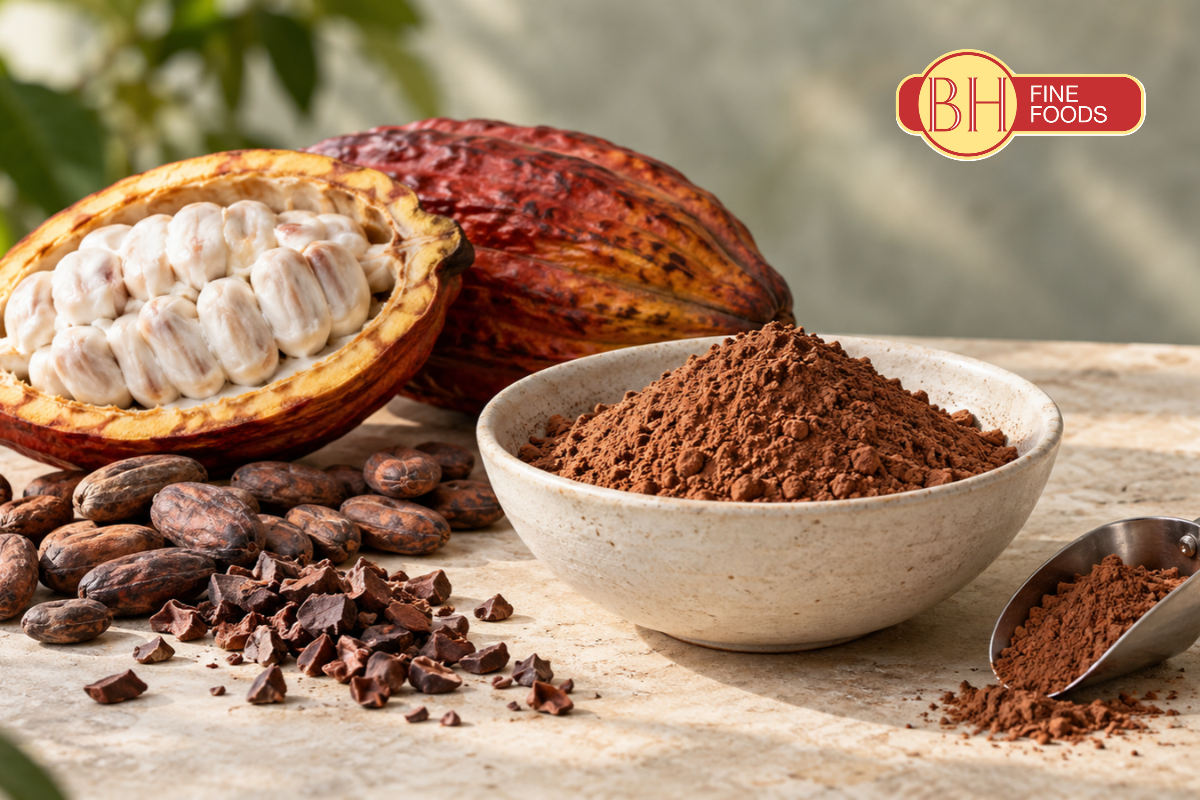
“Raw cacao” is a term used in the market for cacao products made without conventional high-temperature roasting or with other processing controls intended to limit heat exposure. The term does not, by itself, guarantee a specific temperature, processing method or nutritional profile.
For food manufacturers, the practical approach is to ask how the ingredient was made and review the supplier’s specification. Processing claims should be supported by clear product information.
What does “raw cacao” mean?
Suppliers do not always use “raw” in the same way. Some describe products as raw when beans are not conventionally roasted; others refer to temperature limits during drying, milling or pressing. There is no single temperature stated in this article as a universal pass-or-fail standard.
Cacao beans are generally fermented and dried after harvest. Fermentation is a biological process that can naturally generate heat: studies report fermenting bean masses reaching about 45–50°C. That means “raw” should not be taken to mean that the beans experienced no heat at any stage.
How is raw cacao powder made?
Cacao powder production typically involves harvesting, fermenting and drying the beans, then separating the cocoa butter from the cacao solids and grinding the remaining cake into powder. A product marketed as raw may omit conventional roasting or use a supplier-defined low-heat process. The exact method varies.
If temperature matters to your product or claim, ask the supplier which steps are temperature-controlled, how temperatures are measured, and what limit applies at each step. Milling and pressing can also generate heat, so a temperature claim should cover the actual process rather than rely on the word “raw”.
Does raw cacao always have more nutrients?
No. Fermentation, drying, roasting and alkalisation can all affect cacao’s flavanol composition, but the result depends on the beans and process conditions. The word “raw” alone does not prove that a powder has a higher flavanol level than another powder.
Minerals such as magnesium and iron are not a basis for assuming that a raw-labelled product is nutritionally superior. If a nutrient or flavanol level is important to a finished product, request suitable analytical data for the relevant batch.
Commercial applications
Raw or minimally processed cacao powders may be considered for snack bars, protein balls, granolas, smoothie blends, beverage mixes and confectionery. Suitability depends on flavour, colour, solubility, microbiological specifications and the manufacturing process.
Food safety and quality checks
“Raw” does not mean pathogen-free. A study of raw cocoa beans detected Salmonella in some of the samples it tested. Commercial buyers should assess the supplier’s food safety controls and establish whether a validated pathogen-reduction step is included in the ingredient’s processing.
Depending on the product and intended use, ask suppliers for:
· A product specification covering process, pH, fat content and intended use
· A batch-specific Certificate of Analysis and relevant microbiological results
· Information on validated pathogen controls and any kill step
· Heavy-metal results, including cadmium and lead where relevant
· Certification details and the scope of each certification
Testing should form part of a broader supplier approval and food safety programme; a single test result cannot replace effective process controls.
BH Fine Foods wholesale cacao powder
BH Fine Foods supplies natural, non-alkalised cacao powder for commercial food production. Our current powder is roasted, so it is not a raw cacao powder. Contact us for the current specification, certification details and batch documentation.
We can also source alkalised cacao powder so please let us know your requirements.
Explore our wholesale cacao powder range: https://www.bhfinefoods.com.au/wholesale-cacao
Contact BH Fine Foods: https://www.bhfinefoods.com.au/contact