
Cacao vs Cocoa: What Food Manufacturers Need to Know
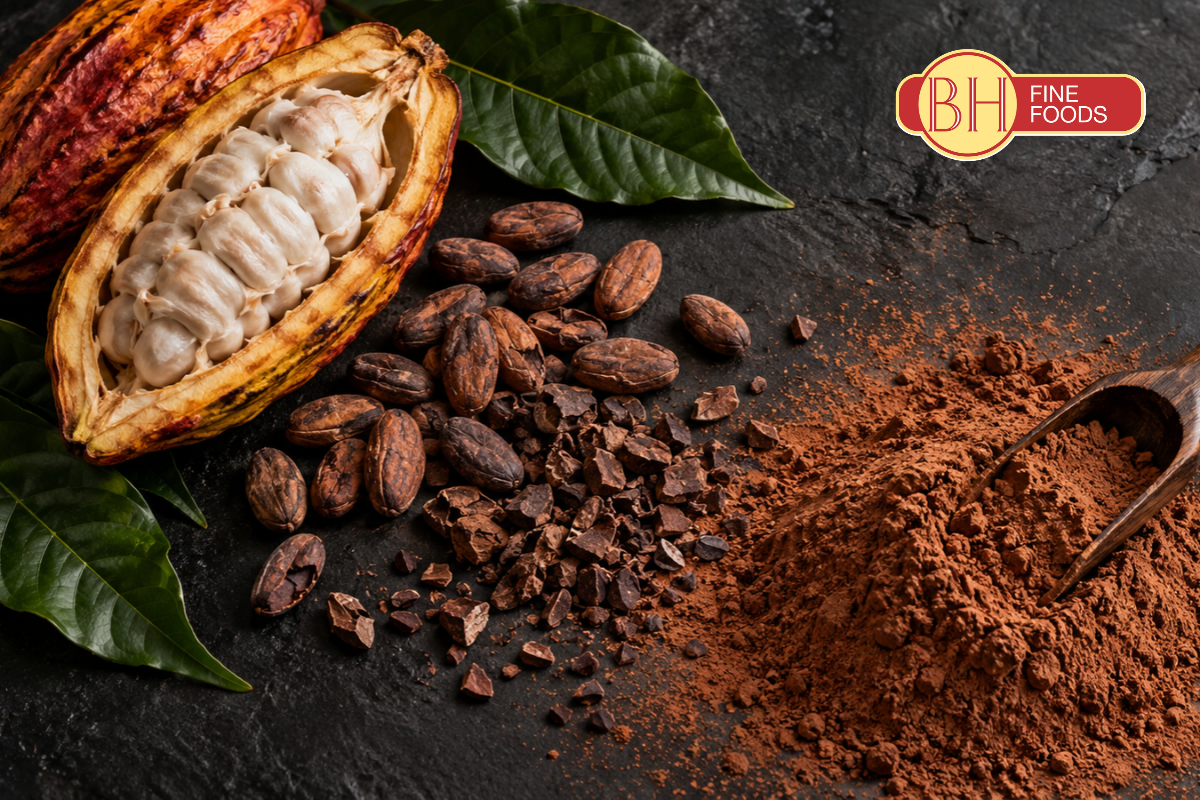
The words “cacao” and “cocoa” are often used to describe products made from the same plant, Theobroma cacao. In food manufacturing and retail, however, the terms are not used consistently enough to tell you exactly how a powder was processed.
For food manufacturers, the useful comparison is between product specifications and processing methods. Roast profile, alkalisation, pH, fat content and flavour are more informative than whether a supplier calls the ingredient cacao or cocoa.
Are cacao and cocoa different products?
Both terms are used for ingredients derived from cacao beans. Some suppliers use “cacao” to suggest a less processed or minimally heated product, while “cocoa” is often used for conventional roasted powder. These are common market conventions, not reliable technical definitions that apply to every supplier or product.
The word on the label alone does not confirm whether the beans were roasted, what temperature or time was used, whether the powder was alkalised, or how much fat it contains. Ask for the product specification when those details matter to your formulation.
How processing affects cacao and cocoa powder
After harvest, cacao beans are generally fermented and dried. They may then be roasted, milled and pressed to separate cocoa butter from the remaining solids, which are ground into powder. Some powders are also treated with an alkaline agent, a process commonly called Dutch processing.
Fermentation, drying, roasting and alkalisation can influence flavour, colour and the levels and profile of naturally occurring flavanols. Research shows that changes vary with the beans and the time, temperature and method used. It is therefore too broad to assume that every product called cacao has more flavanols than every product called cocoa.
Roasting can develop chocolate aroma and flavour. Alkalisation can reduce acidity and produce a darker colour and a milder taste. The degree of change depends on the process and the product.
Does the name tell you the nutritional profile?
No. “Cacao” or “cocoa” on its own is not a substitute for analytical data. If a particular nutrient or flavanol level matters to your product, request a specification or suitable test results for the ingredient you intend to buy.
Likewise, terms such as “raw” or “minimally processed” should be supported by clear supplier information about the process. Do not infer a specific temperature, nutrient level or product property from the word “cacao” alone.
What should manufacturers check when sourcing powder?
When comparing wholesale cacao or cocoa powder, assess the properties that affect your product and process. Ask suppliers about:
· Whether the powder is natural or alkalised, and its pH
· Roast profile or processing details, where relevant to the product
· Fat content, colour and flavour
· Country or region of origin, if required for your specification
· Batch documentation, including a Certificate of Analysis
· Organic or other certifications and the scope of the certification
Then test the ingredient in your own formulation. A pilot trial can confirm flavour, colour, texture and process performance before a full production run.
Wholesale cacao powder for commercial production
BH Fine Foods supplies wholesale cacao powder for food manufacturers and commercial brands. Contact our team to discuss your application, required fat content, processing preferences, certifications and documentation.
Explore our wholesale cacao powder range: https://www.bhfinefoods.com.au/wholesale-cacao
Contact BH Fine Foods: https://www.bhfinefoods.com.au/contact